Video can’t be displayed
NOW available Autoflight E-VTOL PROsPERITY - 5 seats + 1 Pilot CARRYALL - 400KG REMOTE BVLS
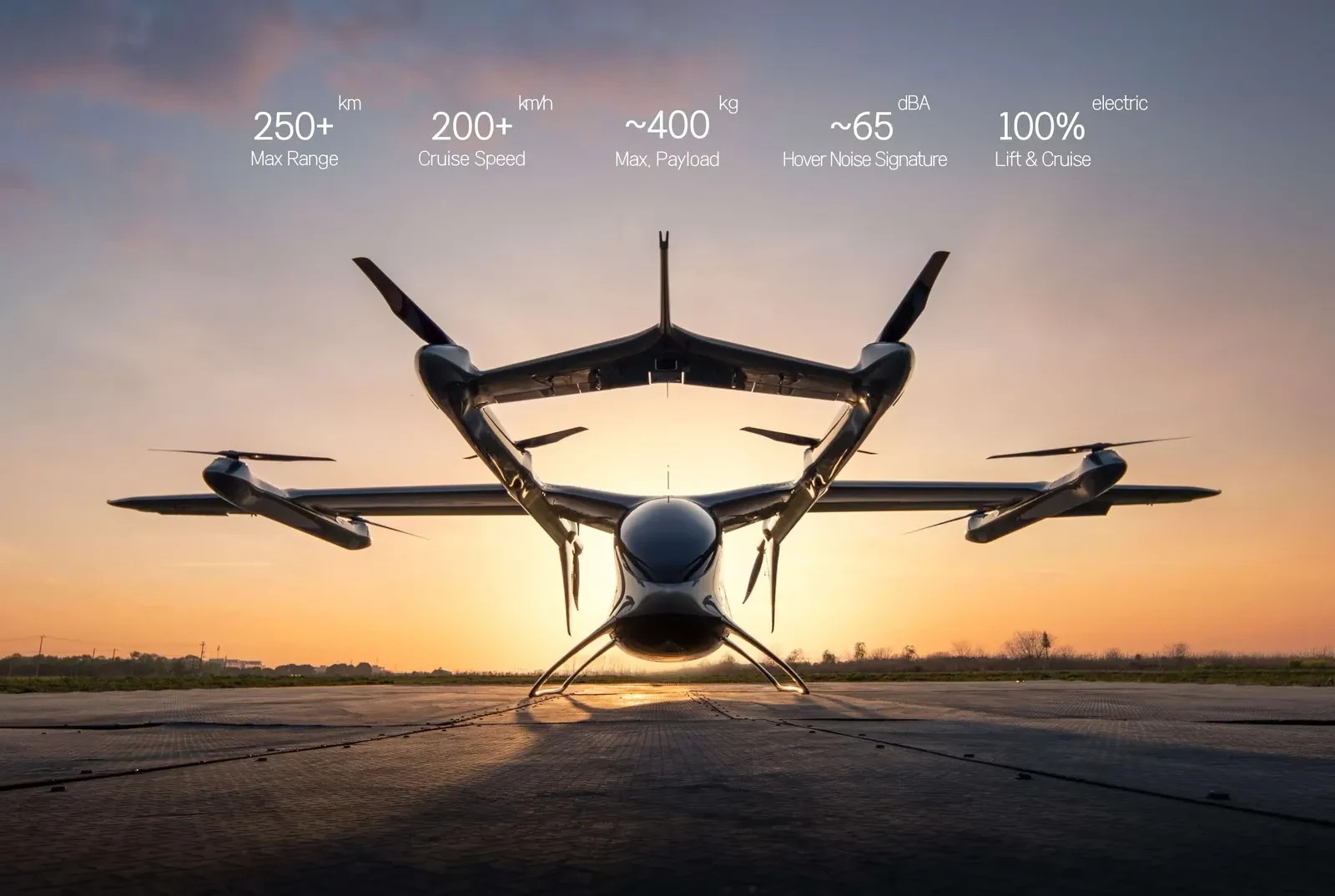
AutoFlight eVTOL aircraft represent one of the most practical and operationally usable eVTOL flight profiles, with a more efficient and application-focused airframe design than tilt-rotor configurations.
AutoFlight eVTOL aircraft prioritise real-world operability through an efficient, lift-plus-cruise airframe designed for scalable, low-complexity electric air taxi operations.
AutoFlight is a global advanced air mobility company developing and commercialising electric vertical take-off and landing (eVTOL) aircraft for passenger transport, cargo logistics and specialised missions. Its aircraft are designed around practical, lift-plus-cruise architectures that prioritise safety, efficiency, range and manufacturability, supported by extensive flight testing and large-scale cargo operations. In Australia, FlyOnE acts as AutoFlight’s distribution and continuing airworthiness partner, supporting aircraft introduction, regulatory alignment, operational readiness and in-service support as eVTOL operations progress toward large scale commercial deployment.
~50% lower operating cost than conventional helicopter ops
Substantially lower maintenance downtime
Energy independence via local renewable power
Features And Specs
- The Autoflight design team and Australian distribution team are a dedicated a group of engineers and entrepreneurs with decades of experience in next-generation technolog and airborne systems. Their expertise in operating safe, high-performance electric aircraft is built on the large-scale operation of cargo variants, with hundreds of flight hours and thousands of completed transition cycles. KEY DATA Max Range 250+ km Cruise Speed 200+ km Max Payload 400kg Hover noise 65 dBA Seats 6 (including Pilot)
Video can’t be displayed
time is money
In short-range travel, time is money. Existing air taxi services remove hours lost to traffic, transfers, and congestion by converting multi-hour ground journeys into minutes in the air. For business, leisure, and time-critical travel, the value extends beyond speed—delivering reclaimed time, improved productivity, and a smoother, more predictable way to move between destinations. Combined with a spectacular vantage point and a compelling human experience, air taxi travel has proven strong appeal through established operations and is now ready to scale further with AutoFlight eVTOL technology.
the evTOL vision
The eVTOL vision is built around bringing air mobility directly into high-density population centres without the constraints of traditional airports. Electric vertical take-off and landing aircraft enable short, efficient routes supported by a network of compact landing sites, including floating landing pads positioned along rivers, harbours and coastal urban corridors. These water-based platforms provide a scalable, low-impact solution for dense cities, unlocking new access points, reducing ground congestion, and enabling safe, quiet, and sustainable air taxi operations close to where people live and work.
Video can’t be displayed
emergency services
AutoFlight aircraft also support unmanned firefighting applications, providing a new capability for rapid aerial response in high-risk environments. Operated without onboard crew, these electric platforms can be deployed for early detection, targeted suppression, and situational awareness in areas that are dangerous or inaccessible to conventional aircraft. Their ability to operate from confined locations and remain airborne for extended periods enables safer, faster, and more flexible firefighting support while reducing risk to personnel.
Frequently asked questions
Can AutoFlight eVTOL aircraft operate from or be based within residential areas?
AutoFlight eVTOL aircraft are intended for commercial air taxi, logistics, and mission-based operations conducted from approved vertiports and designated landing sites. Operations and parking within residential areas are not envisaged as private-use activities, and aircraft are not designed to be stored in standard residential garages.
Take-off and Landing Approvals:
Are there specific Australian regulations governing where AutoFlight eVTOL aircraft can take off and land?
Yes. AutoFlight eVTOL operations in Australia will be conducted from approved and authorised locations in accordance with CASA regulations and local planning requirements. Take-off and landing sites must meet aviation safety, obstacle clearance, noise, and operational standards, and may include certified vertiports, designated urban landing areas, and approved floating landing platforms.
Estimated Delivery Timeline:
What is the expected delivery timeframe for AutoFlight eVTOL aircraft for commercial operations in Australia?
AutoFlight aircraft deliveries are scheduled as part of coordinated commercial fleet deployment programmes rather than individual private pre-orders. Indicative lead times are typically around six months, subject to final configuration, certification milestones, regulatory approvals, and operational readiness requirements. In Australia, delivery sequencing and entry-into-service planning are managed in coordination with FlyOnE as the local distribution and continuing airworthiness partner, ensuring aircraft are introduced in line with CASA requirements and commercial operating timelines.
Pricing and Configuration Options:
How is pricing structured for AutoFlight eVTOL aircraft used in commercial operations, and what configurations are available?
AutoFlight eVTOL aircraft are offered as part of commercial fleet programmes rather than individual retail sales, and pricing varies based on aircraft configuration, mission profile, and operational requirements. Final pricing reflects factors such as payload configuration, avionics and autonomy packages, mission-specific equipment, support services, and certification status. In Australia, commercial pricing, configuration selection, and lifecycle support are coordinated with FlyOnE as the local distribution and continuing airworthiness partner, ensuring each aircraft is configured to meet CASA requirements and the needs of commercial air taxi, logistics, or specialised operations.
Pilot Training & Licensing:
What pilot licensing and training will be required to operate AutoFlight eVTOL aircraft in Australia, and does FlyOnE support pilot training?
Pilot licensing and training requirements for AutoFlight eVTOL aircraft will be defined under a new powered-lift or equivalent category that is still being developed by aviation regulators. These aircraft are intended for commercial operations and will not operate under existing recreational or private pilot licence frameworks. In Australia, training pathways, type-specific endorsements, and operational approvals will be developed in coordination with CASA as the regulatory framework matures. FlyOnE, as AutoFlight’s distribution and continuing airworthiness partner, is actively involved in supporting future training programmes and operational readiness initiatives aligned with the final regulatory structure.
Maintenance and Support:
What maintenance and support arrangements apply to AutoFlight eVTOL aircraft in Australia, and does FlyOnE provide these services?
AutoFlight eVTOL aircraft are supported through structured, commercial maintenance programmes designed around condition-based monitoring, modular systems, and manufacturer-approved maintenance intervals. Maintenance schedules will be finalised as part of the aircraft’s certification and entry-into-service process and are intended to support high-utilisation commercial operations. In Australia, FlyOnE acts as the local distribution and continuing airworthiness partner for AutoFlight, providing regulatory-aligned maintenance oversight, technical support, and in-service management.
Insurance and Registration:
What insurance and registration requirements apply to AutoFlight eVTOL aircraft in Australia, and who supports this process?
Insurance and registration for AutoFlight eVTOL aircraft in Australia will be structured around commercial operations and aligned with the applicable certification and operational framework as defined by Civil Aviation Safety Authority. Requirements will be finalised as the powered-lift category and associated operational rules are established, including hull, third-party liability, passenger liability, and mission-specific cover where applicable. In Australia, FlyOnE supports operators as AutoFlight’s distribution and continuing airworthiness partner, assisting with regulatory alignment, registration pathways, and engagement with insurers experienced in emerging aviation platforms. Insurance costs and structures will vary based on aircraft configuration, utilisation, operating environment, and certification status, consistent with other commercial aviation operations.
Did we miss something? Please let us know if you have any further questions.